Q&A: Most Searched Questions on the Korean War
What is the current status of the Korean War?
Technically the war has never ended; the 1953 armistice halted combat but no peace treaty was ever signed, leaving North and South Korea in a state of suspended hostilities that persists to this day.
Korean War dates: when was the Korean War?
It ran from June 25, 1950, when North Korea invaded the South, until the armistice on July 27, 1953.
When did the Korean War start? When did the Korean War end?
It started on June 25, 1950, with the North Korean invasion and ended with the armistice signed July 27, 1953.
When did the Korean War officially end?
Officially it never has; active fighting stopped with the 1953 armistice, but without a peace treaty the conflict remains unresolved on paper.
How long did the Korean War last?
Three years and one month: from June 1950 to July 1953.
Why did the Korean War start?
The core causes were the postwar division of Korea at the 38th parallel, rival regimes claiming legitimacy over the whole peninsula, and North Korea’s decision to invade with outside backing to force unification.
Who won the Korean War?
No one won outright; the front lines returned close to the original border, the South survived as a non-communist state, and both sides paid a staggering price for an inconclusive result.
Korean War casualties: how many people died in the Korean War?
Estimates range from 2.5 to 4 million total dead, including 1.5–2 million civilians and hundreds of thousands of soldiers from all sides, with South Korea, North Korea, China, and the United States bearing the heaviest losses.
Korean War orphans / documentary
The war created tens of thousands of orphans and displaced children, including mixed-race Amerasians and GI babies. Many ended up in orphanages or adopted overseas, with their stories documented in films.
Several stories explore the lives of Korean War orphans and adoptees, many were allegedly kidnapped.
- Documentary: Korea’s Lost Children
- Documentary: Kim Il Sung’s Children
- Her daughter was taken and sent abroad – 44 years later, they found each other https://www.bbc.com/news/articles/c0mr9ppn33po
- Western nations were desperate for Korean babies. Now many adoptees believe they were stolen https://www.nbcbayarea.com/news/national-international/western-nations-were-desperate-for-korean-babies-now-many-adoptees-believe-they-were-stolen/3658324/
- A woman’s search for a lost childhood in South Korea https://www.aljazeera.com/features/2025/11/15/a-womans-search-for-a-lost-childhood-in-south-korea
- Widespread adoption fraud separated generations of Korean children from their families https://www.oregonlive.com/pacific-northwest-news/2024/09/widespread-adoption-fraud-separated-generations-of-korean-children-from-their-families.html
Introduction
The Korean War remains one of those conflicts that history files under “technically never ended,” a frozen stalemate dressed up as resolution while the guns fell silent decades ago. What began as a swift northern thrust across an arbitrary line on a map turned into three brutal years of slaughter, proxy maneuvering between superpowers, and a human cost that still echoes in the divided peninsula today. No grand victory parades, no clear winner: just an armistice that paused the fighting without settling the score. The numbers tell their own grim story: millions dead or displaced, cities reduced to rubble, and a generation of children scarred in ways the battlefield maps never showed.
When Was the Korean War
The Korean War started on June 25, 1950, when North Korean forces, backed by Soviet equipment, poured across the 38th parallel in a coordinated invasion aimed at swallowing the South whole. Within days they had seized Seoul, pushing South Korean and early American defenders into a shrinking perimeter around Pusan.
The dates that matter most: fighting raged until the armistice signed on July 27, 1953, at Panmunjom, bringing active combat to a halt after three years, one month, and two days of carnage. No peace treaty followed; the two Koreas simply agreed to stop shooting while the underlying division hardened into the most militarized border on earth.
The war years: 1950 to 1953: marked the first major hot flare-up of the Cold War, where ideological lines drawn after World War II turned into artillery barrages and jet dogfights.
Those who ask when the Korean War began or ended receive the same terse answer: it opened with a surprise dawn assault and closed with a handshake that changed nothing fundamental on the ground.
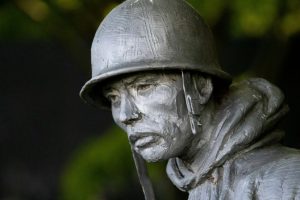
What Caused the Korean War and the Key Events That Lit the Fuse
The main causes of the Korean War trace back to the messy postwar carve-up of the peninsula. After Japan’s defeat in 1945, the United States and Soviet Union split Korea at the 38th parallel for temporary occupation, a hasty line drawn by junior officers that hardened into permanent states by 1948: a communist North under Kim Il Sung and an anti-communist South under Syngman Rhee.
Border skirmishes simmered for years, each side claiming legitimacy over the whole peninsula. The spark came when North Korea, confident in its Soviet and later Chinese support, launched the full invasion on that June morning in 1950, betting it could unify the country under Pyongyang before the West reacted decisively.
Key events unfolded in rapid, bloody sequence: the North’s early blitz, the UN counteroffensive under American leadership that pushed north toward the Yalu River, China’s massive intervention that sent UN forces reeling back, and finally the grinding stalemate of trench warfare reminiscent of an earlier century.
The conflict served as a proxy battlefield where larger powers tested wills without risking direct confrontation.
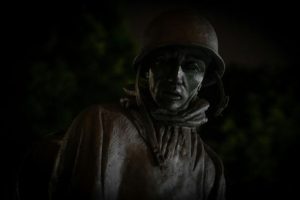
Kim Il Sung’s Push for Permission: Stalin’s Green Light and Mao Zedong’s Reluctant Approval
Kim Il Sung pressed hard for the go-ahead, first hammering Stalin with repeated requests throughout 1949 only to be told to wait. By early 1950 Stalin finally warmed to the idea but made his approval conditional: Kim had to secure Mao Zedong’s consent as well, and any serious trouble with the Americans would fall on China’s shoulders, not Moscow’s.
Kim traveled to Beijing in May 1950 and laid out the plan. Mao voiced doubts: he had just finished his own civil war and worried about American intervention. But Kim assured him Stalin had already signed off. In the end Mao gave his reluctant nod, a decision that later cost China dearly when its “volunteers” had to bail out the collapsing North.
The episode carries the faint smirk of great-power maneuvering: Stalin kept Soviet hands clean while shifting risk southward, Kim manipulated his patrons by playing one against the other, and Mao, fresh from victory over Chiang, found himself committed to a war he never fully owned. That quiet permission in Beijing helped light the fuse that June.
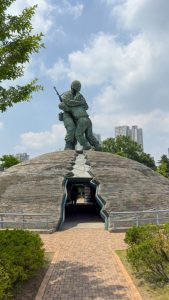
How Did the Korean War End, Who Won, and What Is Its Current Status
The Korean War ended: not with surrender or triumph, but with an armistice on July 27, 1953, after protracted talks that dragged on while men kept dying over worthless hills. The agreement established a demilitarized zone near the original 38th parallel, repatriated prisoners with options to stay or return, and halted the shooting without resolving the underlying claims.
No side won outright; the map looked remarkably similar to 1950, though South Korea gained a sliver of territory and the North avoided total collapse. The United States and its UN allies prevented a communist takeover of the South, yet the cost in blood and treasure left a bitter aftertaste.
Decades later, the current status of the Korean War is simple and sobering: it has never formally concluded. The armistice still holds in theory, but without a peace treaty the peninsula remains in a state of suspended hostilities, punctuated by occasional crises.
North and South eye each other across one of the most fortified borders in existence, a reminder that some wars simply refuse to die: they merely go dormant. Those who ask who won the Korean War receive the cynic’s reply: the survivors, if they can call it that.
Korean War Casualties: The Human Ledger That No One Likes to Balance
The Korean War death toll paints a picture of industrialized slaughter on a scale that still shocks. Estimates place total military and civilian losses between 2.5 and 4 million, with roughly one million military deaths and up to three million civilians caught in the crossfire, bombing campaigns, and famine that followed. South Korea suffered around 138,000 dead and nearly a million total casualties; American forces lost over 36,000 killed; other UN contributors added thousands more.
On the northern side, North Korean and Chinese forces together tallied hundreds of thousands dead, with Pyongyang bearing the brunt of relentless air campaigns that leveled cities.
The numbers carry a resigned weight: entire families erased, villages turned to ash, a peninsula scarred so deeply that recovery took generations. When people search for Korean War total casualties or how many people died, the figures serve less as facts and more as quiet accusations against the ease with which great powers turn distant lands into testing grounds.
The Korean War Orphans Left in the Rubble
Beyond the battlefield tallies came a quieter tragedy: the Korean War orphans whose lives were upended long after the armistice ink dried. War tore families apart, leaving thousands of children: many fatherless: scrambling for survival in ruined cities. Korean War orphans stories and documentaries reveal waves of abandonment, with mixed-race children known as Amerasians or GI babies facing particular stigma in a society that prized bloodlines.
These “GI babies,” born to Korean mothers and American servicemen, often endured rejection, poverty, and institutional neglect; some were funneled into overseas adoptions that promised new lives but delivered their own complications.
Famous Korean War orphans include figures who rose from the ashes through sheer grit, yet the broader narrative remains one of systemic fallout: hundreds of thousands of children processed through orphanages, many shipped abroad in programs that blended humanitarian impulse with cold logistics. The documentaries and personal accounts that surface decades later carry the same faint smirk of history: wars end for soldiers, but the orphans they create carry the conflict forward in silence, generation after generation.
In the end, the Korean War stands as a masterclass in unresolved tension: a conflict whose dates, causes, and bloody duration delivered no final verdict, only an expensive pause. The orphans it scattered across continents serve as living footnotes to that reality, reminders that proxy wars leave behind more than borders and body counts.
Decades on, the peninsula’s division persists not because anyone forgot, but because no one has found a way: or the will: to close the book properly. The guns stopped, the questions remain, and the ledger stays open.